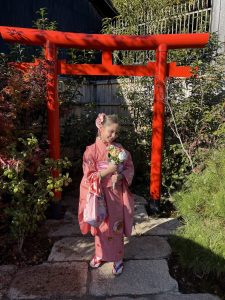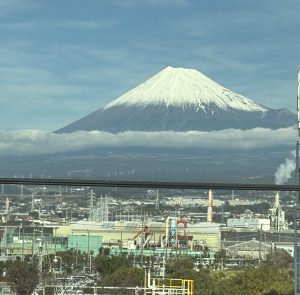
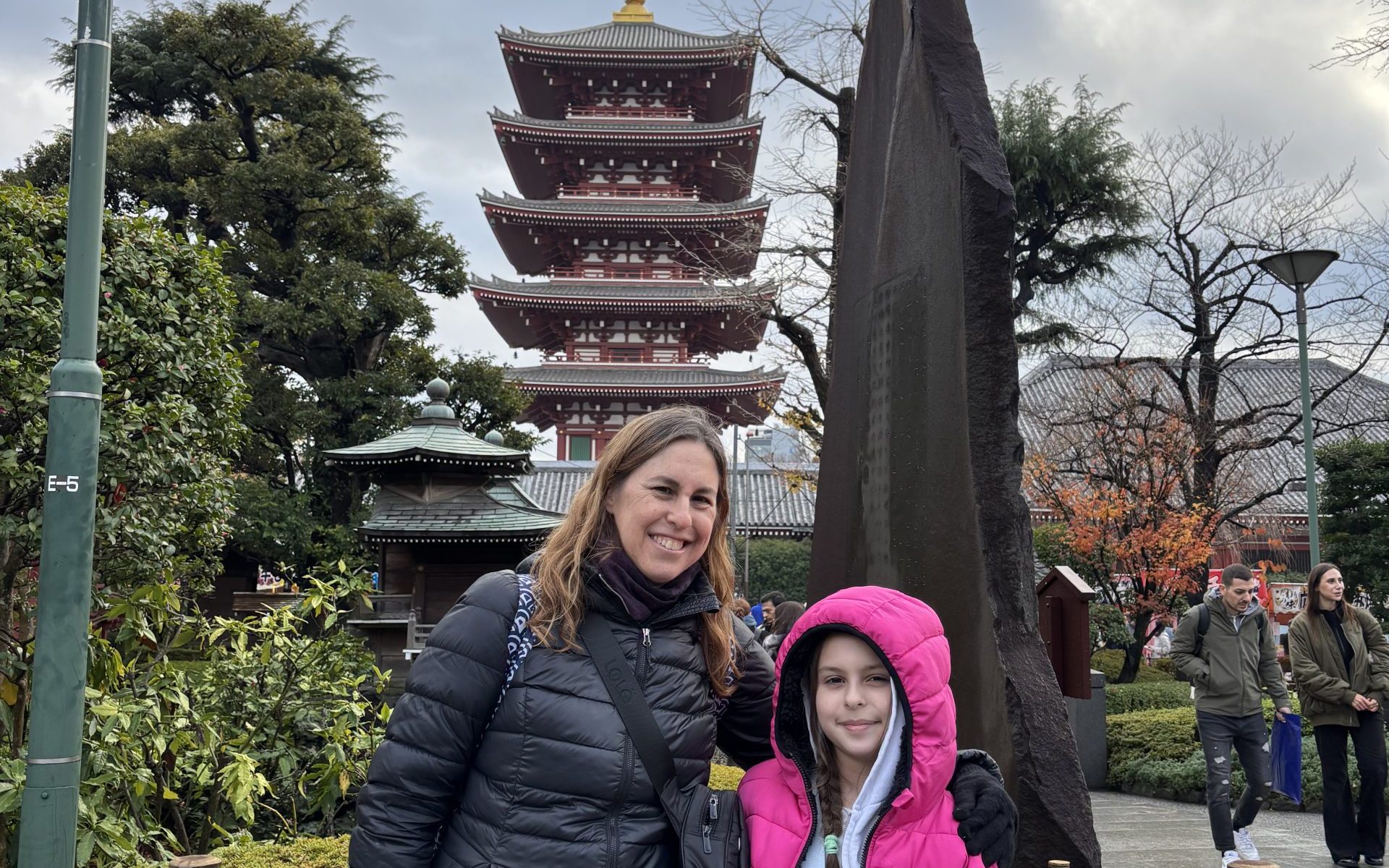
Almost one year ago, early in 2025, my mother-in-law called me and asked me if I wanted to travel to Japan with her, along with my daughter and my niece – the two youngest grandchildren. My first thought was, she’s crazy, absolutely not. But she explained how she came to this idea, how it was possible, and I quickly realized it was a brilliant idea. And the planning began.
How do you plan a complex trip like this, with people ranging in age from 9 to 85, living across the globe in Canada, Israel and New Zealand? How do you find flights that line up, interests that match and food to eat? Could we pull this off?
Once we booked the flights, which was relatively easy, the real work began. I read travel blogs, followed influencers on Instagram, and I spoke with friends and family who had traveled to Japan in recent months or years ago. I listened to all kinds of advice and learned as much as I could, from studying maps of the insane Tokyo transit system, to checking vegetarian options and kid and senior-friendly venues. The challenge was exciting.
For me, planning a trip is just as fun as going on the trip. The anticipation of what’s ahead is exhilarating, dreaming about the food about to be consumed and places to be visited. As the day of departure drew closer, the number of Instagram reels being shared across our little traveling group intensified, with videos of people eating crazy stuff at markets and shopping for cosmetics in unique only-in-Japan type stores.
By the time we left on Dec. 12, I was ready. Or was I? No matter how much I studied and planned, nothing could have prepared me for this special once-in-a-lifetime experience. As I learned the moment I got off the plane in Tokyo, Japan is both methodical and haphazard at the same moment. It’s orderly and disciplined, and yet it’s also wild and chaotic.
So, after traveling to the Land of the Rising Sun, here are some of my musings, reflections, suggestions and a bit of advice too. I’m not a travel blogger or expert, but I’d consider myself an experienced, organized and thoughtful traveler. Below are some highlights and lowlights, cool stuff we did, a few strange things we experienced and a bit of fun too. Happy reading! Also follow me on Instagram, @AliciaRichler, for many more photos.
Flying to Japan
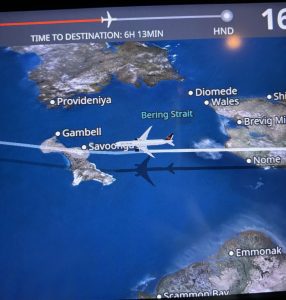
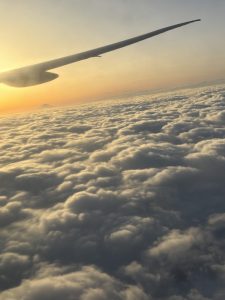
Air travel is expensive, even an economy ticket. And Japan, depending on where you live, is a long flight. I decided to book the non-stop, direct flight from Toronto, which is a whopping 14 hours to get there. Totally worth it. The route is interesting (I put the map on my screen the moment I boarded the plane), flying over northern North America, over the Bering Strait, then over the Pacific Ocean just east of Russia. If you can handle a long flight, go direct.
It’s also important to note that Tokyo has two international airports, Haneda and Narita. If you have the choice, go with Haneda. It’s on the southern side of the city, and it’s close and easily accessible by many transit options. We arrived at Haneda and left via Narita (as our travel companions only had that as an option). Narita is over an hour east of Tokyo, and it’s huge. Also, which I learned on Instagram, it’s a big time saver to register your trip in advance with Visit Japan Web, which gives you a QR code that you can show at immigration. I’ll get to QR codes later. They love their QR codes in Japan!
The toilets
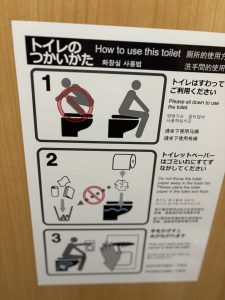
I had to write about Japanese toilets. This tells me that either Japan is living in a futuristic society or the rest of the world is still in the dark age of lavatory technology. When I arrived at our first hotel in Tokyo and went to the bathroom, I was a bit dumbfounded by the technology before me on my toilet and the complex (Japanese) signage on the wall beside. The photos made me giggle too.
But I soon embraced the Japanese toilet. It’s no ordinary toilet. The built-in bidet is just the beginning. It has different settings for where you want the water spray to go and the strength of the stream. And the heated seat. The tremendous joy of sitting down with that gentle warmth on the behind is wondrous.
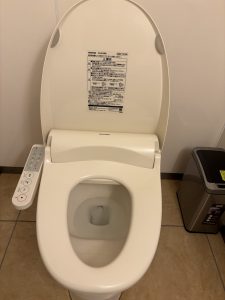
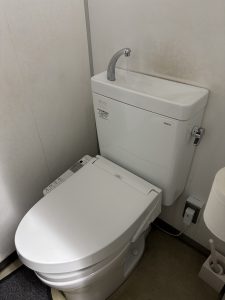
At first, I thought it was just hotels or private homes. But then I learned this is standard across Japan, including public bathrooms, malls, museums and gas stations. And the bathrooms are spotless! No garbage or toilet paper on the floor. I will note that the toilet paper in all my hotel rooms was barely one-ply and shredded upon contact. It may be that I’m not a bidet expert and did not master the balance of bidet and toilet paper use. But next time I go to Japan, I will bring a few rolls of my own 3-ply toilet paper with me.
Walk on the left
I’m left-handed, so I’m all for a left-forward society. In Japan, they take it seriously. They don’t just drive on the left side of the road, which is common around the world (ever visited Great Britain, for example), all movement, even on foot, is on the left. Go up the left side of the stairs, walk along the left side of the sidewalk. And if you don’t, the polite people of Japan will either give you a nasty look, or in the case of one older gentleman, shove you aggressively out of the way.
There are signs reminding you everywhere, with arrows and instructions, to make sure you are compliant. And don’t try to walk up or down an escalator. There are instructions telling you that it’s dangerous and to please stand still.
Signs, signs, everywhere a sign
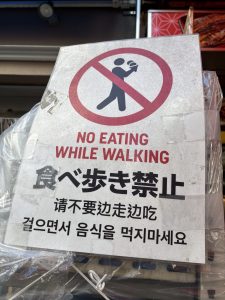
When I travel, I love to look at local signs, information and instructions. I have fond memories of “beware of shedding snake skin” in Hong Kong and “do not swim here” in alligator-infested lakes in Florida. But no one does signs like Japan. There’s a sign, or laminated instructions, for everything. In the bathroom, subway stations, elevators, and stores. Go to a museum or theme park, and the staff are equipped with an instruction sheet, with a mix of Japanese characters and strange photos and drawings, showing you how to do – and not to do – everything. Sit on the toilet this way. Don’t walk this way. You can stand there, but not there. Line up here. Society is ordered, so it’s important to be respectful and follow the signs.
The shopping craze
My mother-in-law and I sent dozens, okay, maybe even hundreds, of Instagram reels back and forth, giving us suggestions of where to shop and what to buy. One influencer would show us how to make our way through Don Quijote and another would advise against that store and to go with a no-name brand that sold the same goods.
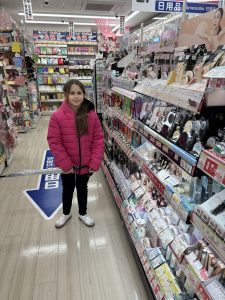
Once we arrived in Tokyo, we quickly saw there were no lack of options for where to shop. It felt like there was one huge downtown-like neighbourhood after another selling anything and everything we wanted or suddenly needed. My daughter couldn’t get enough of the endless aisles of cosmetics with lipsticks, perfumes and creams. My niece loves Chiikawa and anime, and it was hard to find a store that didn’t sell some kind of trinket, doll or toy. Even 7-Eleven.
The egg sandwich
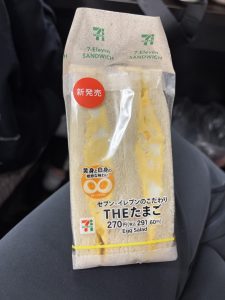
Speaking of 7-Eleven… it may be my favourite store in all of Japan. The other convenience stores, like Family Mart or Lawsons were okay, but 7-Eleven had the best assortment of snacks and fresh food, including fruit, sushi, desserts, rice balls, noodles, soups, and sandwiches of any convenience store I’ve ever seen. I lost count how many times we meandered into this wonderful store and put together a complete meal there. Two of four of us only ate fish and vegetarian there – and we never had a problem finding great food.
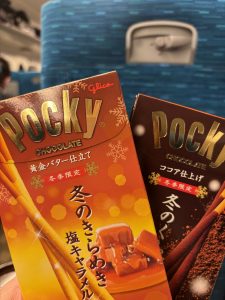
Starting with the famous egg sandwich. There’s a cult-like following for this fluffy white-bread crustless sandwich. I thought at first it was an overblown craze, and yet, it’s really that good. It quickly became my go-to. And the fresh cut-up pineapple. So juicy and so tasty. Add on a crème brulé from the freezer or a personal tiramisu from the fridge, and you’ve got a meal. Add on a package of Pocky (chocolate with salted caramel?) or matcha KitKat, and you have a gourmet meal! My quick grab-and-go breakfast was a Greek-style yoghurt with a banana and an iced coffee. Yes, even the coffee at 7-Eleven is good!
Take transit
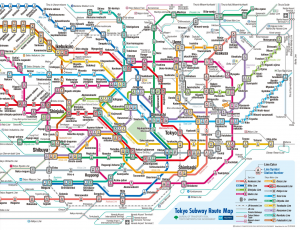
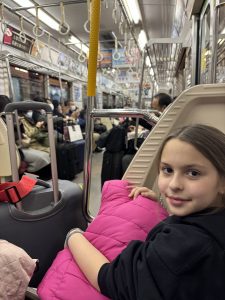
As I shared with my transit-map-loving nephew, the Tokyo public transit map is a work of art. There are so many different lines, owned by different companies, and they go in every direction to every neighbourhood across the city. My best friend quickly became my Google maps app, which gave me detailed instructions on how far to walk and when each of the next trains would arrive. I valued the instructions of which platform to go to and which car to get on to increase the efficiency of the trip.
No matter how many times I studied the system map, I never fully caught on. We got lost, went to the wrong platform, or we were at the right place at the right time, and yet we still got on the wrong train. Or we dared walk up the right side of the stairs (not the left). It also took us a while to realize that most stations did have an elevator. After schlepping my luggage up four flights of stairs, I finally found an elevator at the station next to our hotel.
My advice: be patient using transit in Japan. Give yourself time and keep an open mind. The system is intelligent and runs on time. You will miss some trains, but there’s always another behind it. With a huge population, transit is often very busy, and people won’t look you in the eye or give up their seat for you. I can’t even count how many times we were on a busy train, and my 85-year-old mother-in-law had to stand, even though I gave people the evil eye. I know, we were guests in a foreign country, but in a place that I was told revered the elderly, this was a bit disappointing.
Bring a good pair of walking shoes
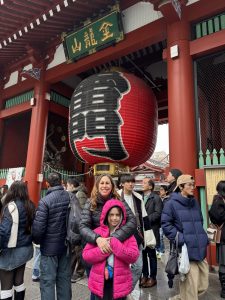
People travel in different ways. For me, the heart of travel is taking in the places I visit. I don’t want to just follow a checklist and go from point A to B to C, in a taxi or private car. I want to see the city and feel the vibes of local life. That means using transit (as I mention above) and walking. A lot of walking.
We based ourselves first in Tokyo then in Kyoto. I chose central hotels that weren’t in the middle of the busiest areas but were close to transit and still very much in the city. This gave us a chance to walk to many sites, shopping and restaurants. The cities we visited are quite flat with wide sidewalks, and we covered at least 10 km each day on foot as we explored. Bring comfortable shoes. Be ready to walk, rain or shine. If you’re going to Japan for a couple of weeks, you will get some rain. Be ready for that, with the right shoes.
What should I eat next?
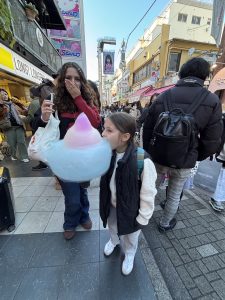
I have never seen so many restaurants, of all sizes, in my life. Japan definitely has a foodie culture, and it felt like everywhere I turned there was somewhere to eat. Even small alleyways had eateries, some of them with just 4 stools or a few tables. Fresh food was on the menu everywhere, with fish, noodles, rice and more. And we tried it all. It didn’t occur to me, until we were in Japan, how much food I ate at home was influenced by Japanese cooking.
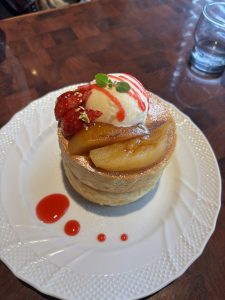
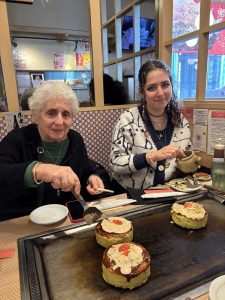
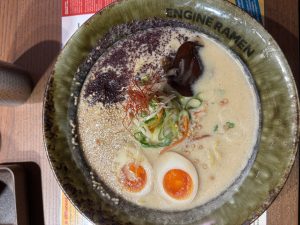
Even though I chose to stick to fish and vegetarian, I never lacked for something to eat. We found plant-based soup bases for soba noodles in broth, a great ramen restaurant (called Engine Ramen) in Kyoto that boasted an excellent vegan ramen (it was soooo good). We enjoyed testing fatty tuna sushi at Tsukiji market and an interesting cheesy okonomiyaki at an impossible-to-find small restaurant in Akihabra’s electric town (called Yukari). I loved the rice bowls with fresh fish, and my picky daughter got her fill of fried chicken with rice.
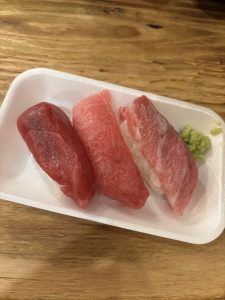
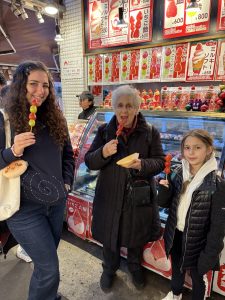
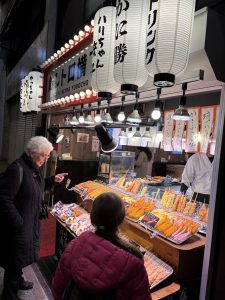
I could probably write a complete post about just the food we ate, at markets, restaurants and stores. We definitely ate our way through Japan. If we were hungry, there was always something to eat close by. Oh and I need to mention the fresh and perfectly fried tempura at Nishiki Market in Kyoto, the snowflake ice in Nara (look it up, super cool stuff), and the long list of items we sampled at Tsukiji Market beyond the tuna (like the sweet mochi rice balls, candied strawberries, perfectly cooked black cod and more).
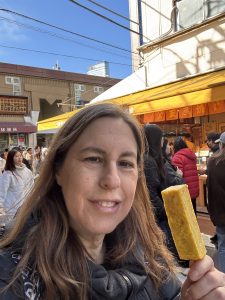
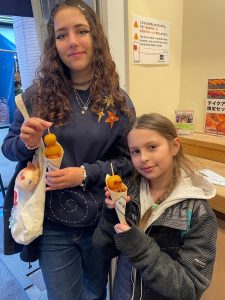
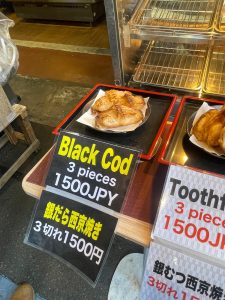
Important note: no eating and walking in Japan. If you are hungry, eat at a restaurant, and if you grab take-out, you either have to eat your food standing beside the store or food stand or find a place to sit and eat. No one walks down the street eating or drinking, and they hold on to their trash and dispose of it later.
QR codes
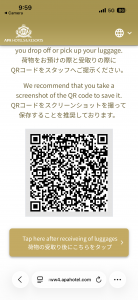
I promised I’d get to this. They like their QR codes in Japan. If you pre-book anything, like a train, entrance to a museum, or if you ask the hotel to hold your luggage, you’re given a QR code to scan. I quite like this system, and it’s efficient like everything else in Japan. But it does mean you really need to keep your smartphone nearby, and you really need to either do a roam like home or get a local data plan. I’ve never used my phone more or scanned more QR codes than I did in Japan.
And if you can’t figure out the QR code, don’t worry, laminated instructions will appear to guide you!
To sum it up
I could write pages more, with details about our itinerary, where we stayed, why we ate where we ate and what we bought, but maybe that’s for another day. I created a detailed Google doc where I tracked everything we did – and I’m happy to share it if you are planning your own trip to this wonderful country. If you go, here are some final notes and thoughts:
- Plan and be organized. Don’t overschedule any day, but pre-book what you can, and give yourself time to get to each destination. This is not a place where you can feel your way through the day and it’s not a sit-back-and-relax resort.
- Get a Suica card. If you have an iPhone, add Suica in the transit section of your digital wallet and add funds digitally. If not, get a card at the airport or select JR stations. Note, unless my mother-in-law missed something, she was only able to add money to her card with cash. There is still a lot of cash used in Japan. Suica can be used for transit across all subways, in all cities, and even at some stores (like 7-Eleven).
- Use a luggage service to move your stuff between cities. I was a bit skeptical of this at first, but it made a huge difference when we traveled between Tokyo and Kyoto. The front desk at our hotels helped us, and it made a huge difference. In Tokyo we had to fill out paperwork for Yamato, and my credit card was charged (about $20 per suitcase), and in Kyoto they did all the work for me and I had to pay cash for JAL. Worth every penny, so that we could move around easily and comfortably ride the bullet train (known as the Shinkansen).
- Third party apps, like Klook, can be helpful for research, but it’s usually cheaper to book activities directly on a website. For example, use the Shinkansen website, or book Teamlabs directly for a timed visit.
- There are many transit options to and from the airport, but if you prefer a taxi, I suggest you pre-book with the website, Booking.com. Not only are they the cheapest, but they offer English-speaking drivers who will be pre-assigned to you and will be in touch with you via Whatsapp to connect at the airport or your hotel.
- Take a cooking class. This was a highlight of our trip! We booked our class through a website called Cookly, and our host and chef Meg was warm and knowledgeable. We made gyoza and noodle soup, and it was delicious.
- Don’t feed the deer in Nara. The females are sweet, but the males are aggressive. They will literally bow to you, looking sweet and cute, and you may feel compelled to give them something to eat, but don’t do it! Have fun bowing to them too, and move on.